Context
Squeeezer began with a problem close to home. My father regularly asked me to compress images and PDFs, while my wife, who is a lawyer, often encountered strict upload limits on legal forms. The available online tools usually asked them to send personal files to an unfamiliar server before getting a smaller version back.
I wanted a simpler answer: open a web app, choose a file and compress it without that file ever leaving the device. The result needed to work for everyday tasks while remaining useful to developers and designers optimizing images or SVG assets.
Process and decisions
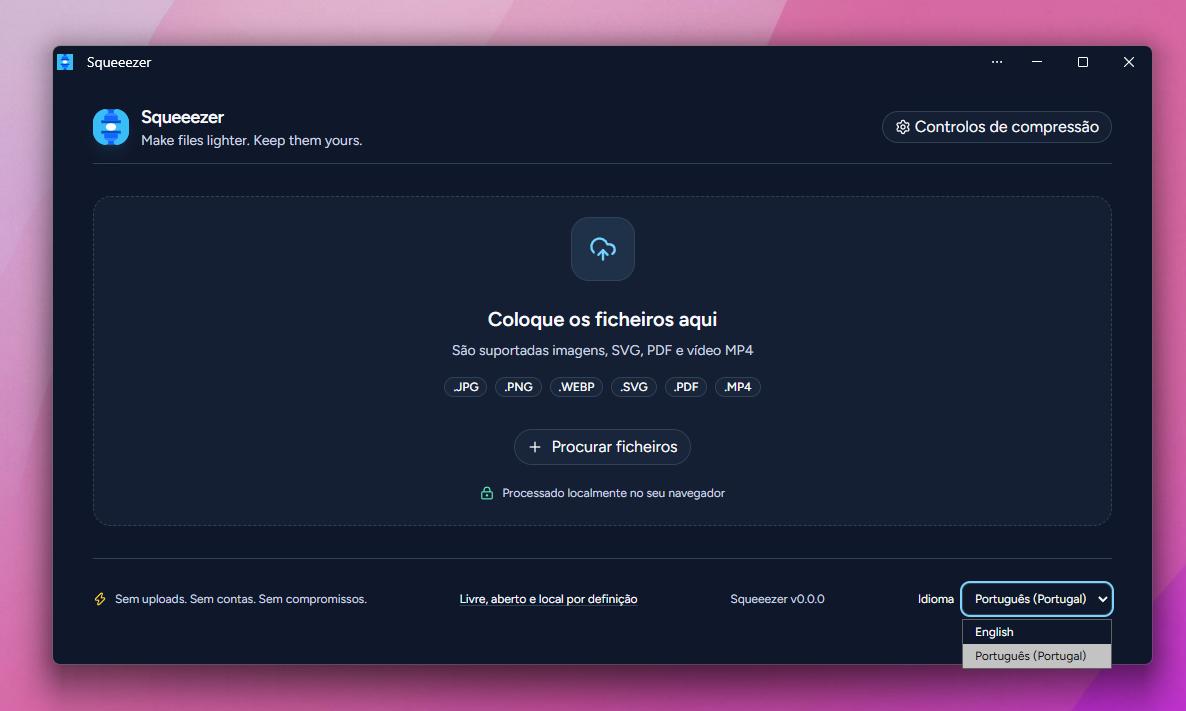
I designed Squeeezer as a progressive web app because I wanted to test how far the modern web platform could carry a computationally demanding product. It requires no account, backend or desktop wrapper. Once loaded, the browser provides the interface, local file access, processing environment and downloadable result.
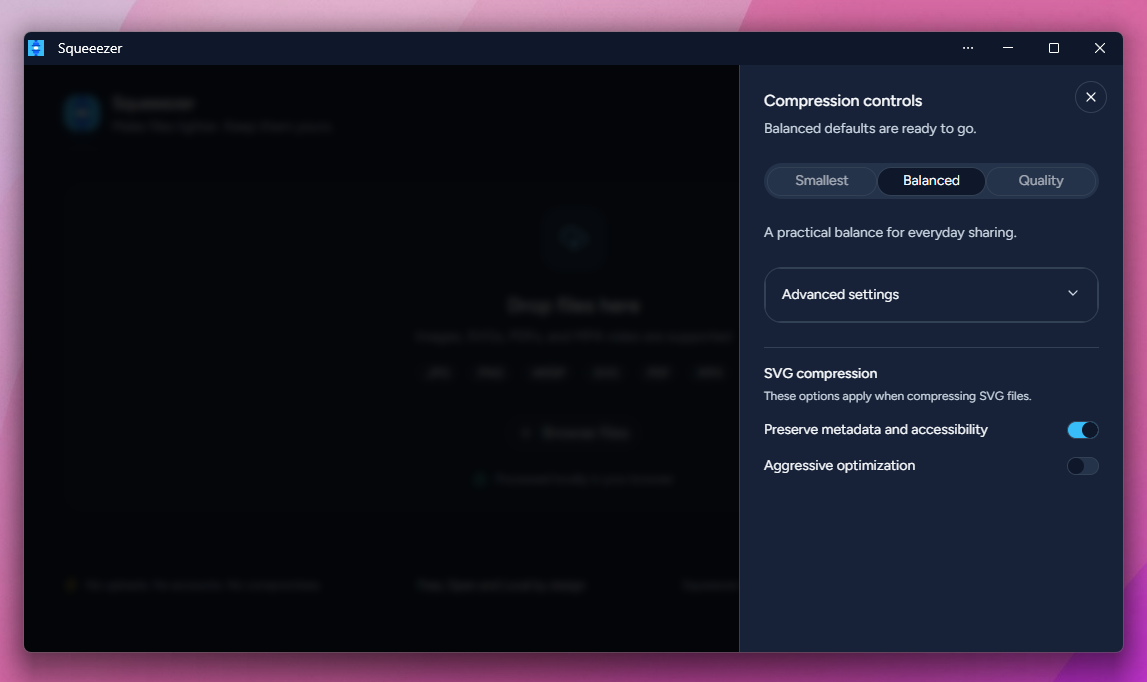
JPEG, PNG and WebP compression use browser-focused jSquash codecs. SVG files are validated before and after SVGO optimization, with controls for preserving metadata and accessibility information. PDF processing removes metadata and rewrites document structure with compact object streams, while deliberately avoiding lossy image rasterization. MP4 compression runs FFmpeg compiled to WebAssembly directly in the browser.
Bringing those engines together was the central engineering challenge. Each has different loading, memory and output requirements, and video processing can be especially demanding. I moved the work into a dedicated Web Worker so decoding, compression and transcoding do not block the interface. Input and output ArrayBuffer objects are transferred between threads instead of copied, and temporary Blob URLs are revoked when results leave the queue.
Product and accessibility
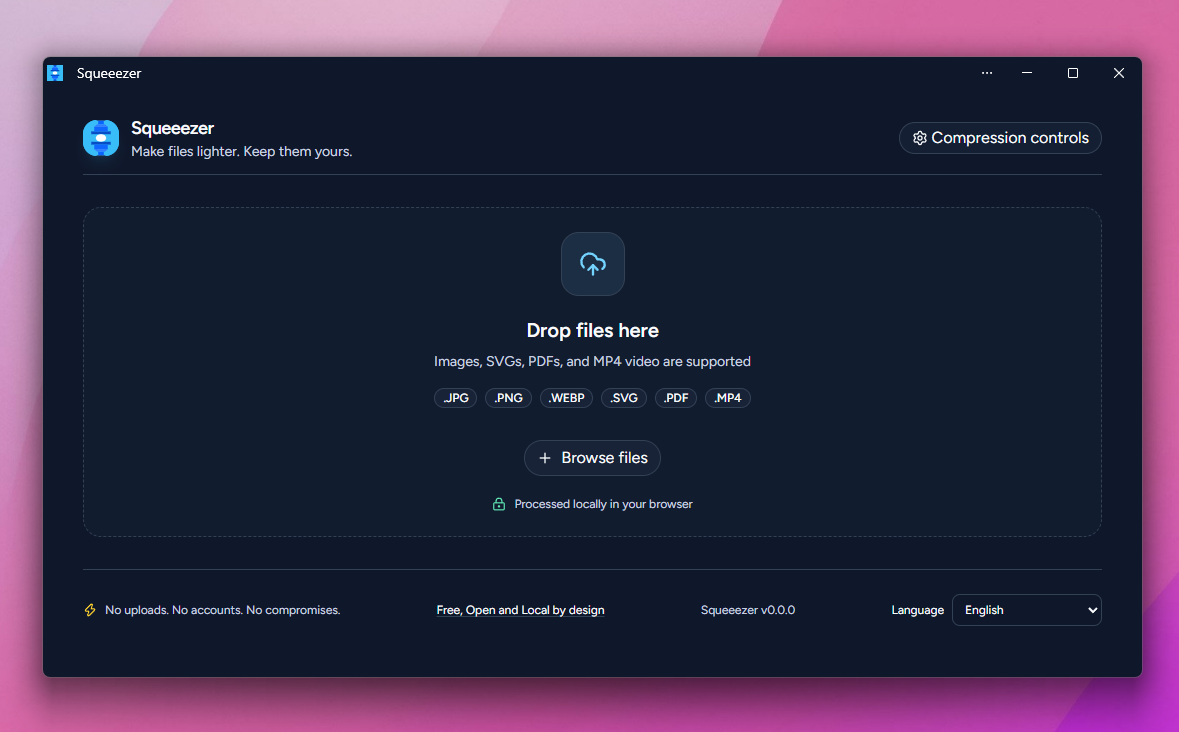
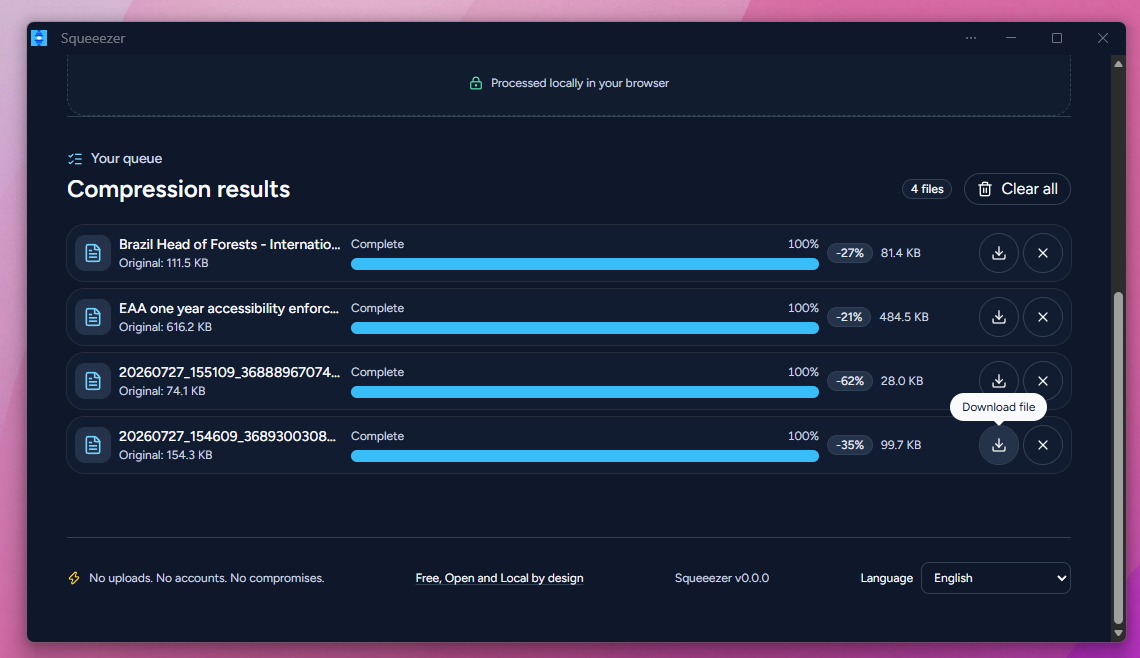
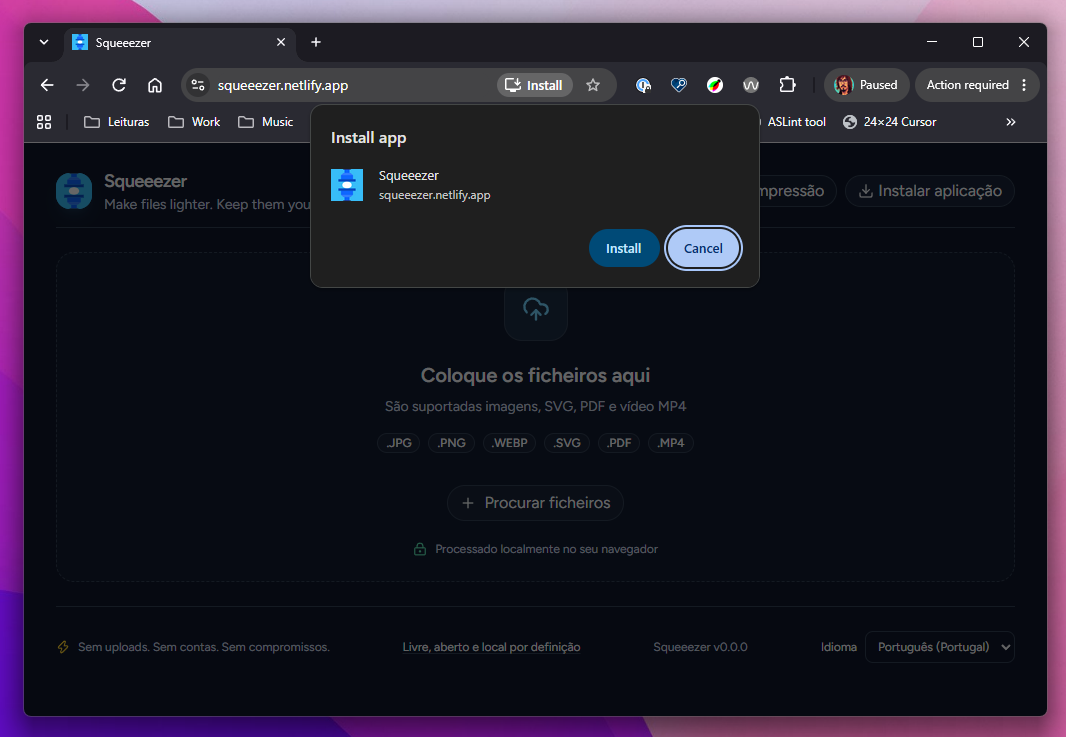
The interface supports drag and drop or a native file picker, optional quality and dimension controls, per-file progress, size comparisons and direct downloads. It is available in English and European Portuguese and can be installed as a PWA.
Compression progress and completion are announced through an aria-live region. The interface provides skip links, visible focus, semantic controls and reduced-motion alternatives. I tested the complete experience manually with a keyboard and NVDA, alongside component tests, automated accessibility checks and Playwright coverage of the production compression workflow.
Privacy is an architectural constraint rather than a promise added to the interface. File bytes stay in the browser, codec assets are served with the application, and there is no upload endpoint or analytics pipeline receiving the content.
Result
I launched the first stable version of Squeeezer on 20 August 2026. It compresses JPEG, PNG, WebP, SVG, PDF and MP4 files through one responsive queue, showing the original size, compressed result and percentage saved before download.
The next steps are moving the app to its own domain and refining the file-handling experience. I am also investigating whether browsers can safely support overwriting a selected source file; if the platform cannot provide that capability consistently, it may become a reason to explore a small native wrapper such as Tauri.
Learning
WebAssembly makes ambitious browser tools possible, but the technology alone is not the product. Workers, memory ownership, honest format limitations and a clear privacy boundary are what turn several powerful codecs into something people can trust with their files.