
Context
I started JS Utilities at Feedzai after seeing the same small functions copied between products. In other cases, teams installed broad packages such as lodash or react-use to gain one or two helpers, adding more code and another dependency for a narrow problem.
The individual functions were simple. The repeated implementation, inconsistent fixes and cumulative bundle cost were not. I wanted one tested library that teams could adopt selectively without turning it into another oversized utility framework.
Process and decisions
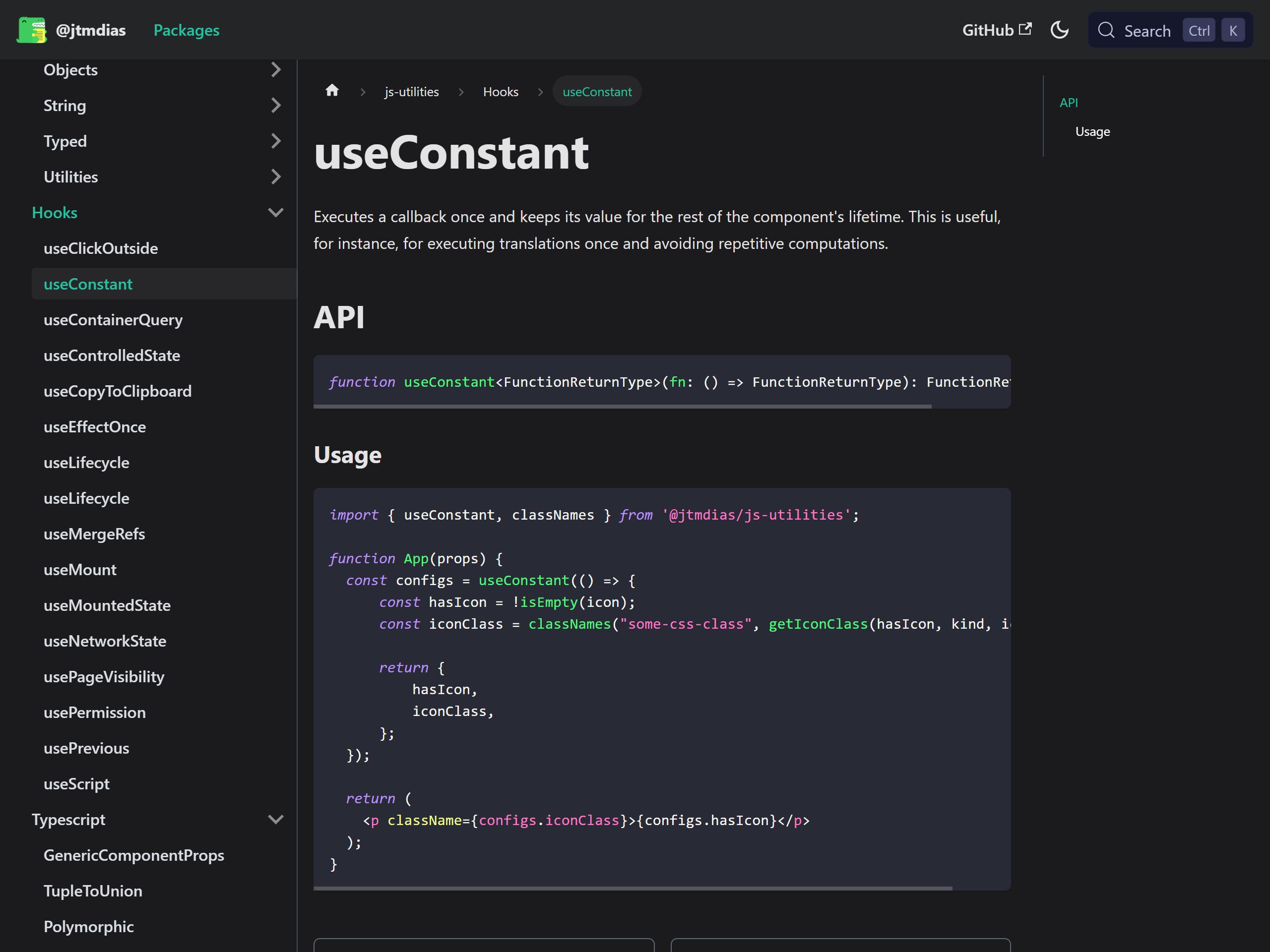
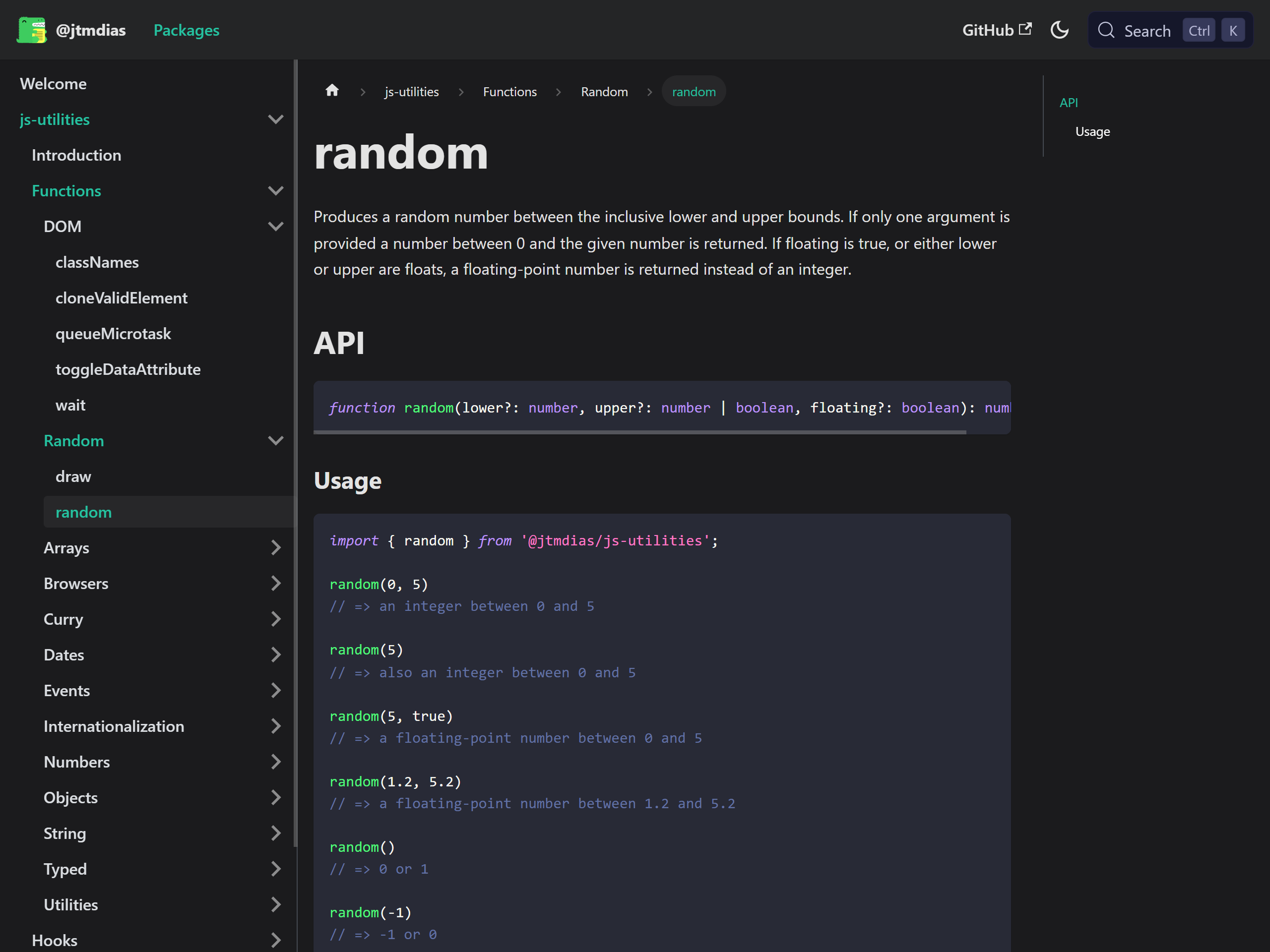
I built the library from patterns already used in production. It includes small test helpers such as random and draw; type checks such as isNil, isEmpty and isPromise; array and object utilities; storage wrappers for browser storage and cookies; and React hooks including useAutoId, useConstant, usePrevious, useMount and useIntersection.
The package publishes ESM and CommonJS builds with matching TypeScript declarations. CommonJS kept it compatible with legacy Feedzai toolchains, while ESM and sideEffects: false allow modern bundlers to remove unused code.
React hooks live under a separate ./hooks export. Plain JavaScript consumers can therefore use functions such as classNames, chunk or getValue without including React-specific code in their bundle.
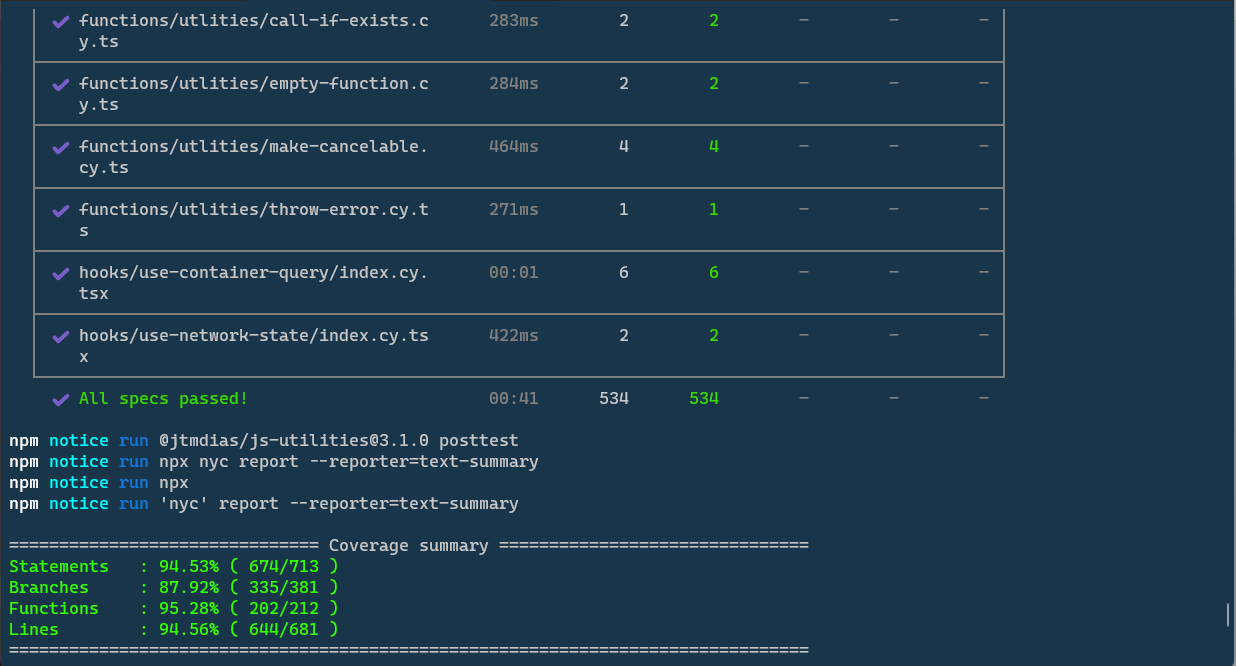
The 11 kB size ceiling came from the complete version 1.0.0 bundle. I turned that starting size into an automated limit so future convenience could not quietly become bloat. Cypress component tests exercise the functions and hooks in a browser.
My fork lives in the shared frontend monorepo because React A11y Tools depends on it, and because the packages can share build, test, documentation and release infrastructure instead of reproducing that setup in separate repositories.
Result
The original @feedzai/js-utilities package is used across major Feedzai products, including Case Manager, Pulse, Genome, RiskOps Studio, SAR Manager and the Escudo design system. Replacing copied helpers and larger general-purpose dependencies reduced duplication and production bundle sizes across that suite.
I continue to maintain and release @jtmdias/js-utilities on npm. It is used daily across my projects and provides the same focused foundation for the other packages in my monorepo.
Learning
A shared utility library stays useful when every addition earns its place. Separate entry points, real consumers and a fixed size budget keep convenience from becoming another source of dependency weight.