Context
The idea began during a major update to Feedzai’s website. We had no automated, repeatable way to run basic accessibility checks across every page, compare releases or see whether a fix survived the next deployment.
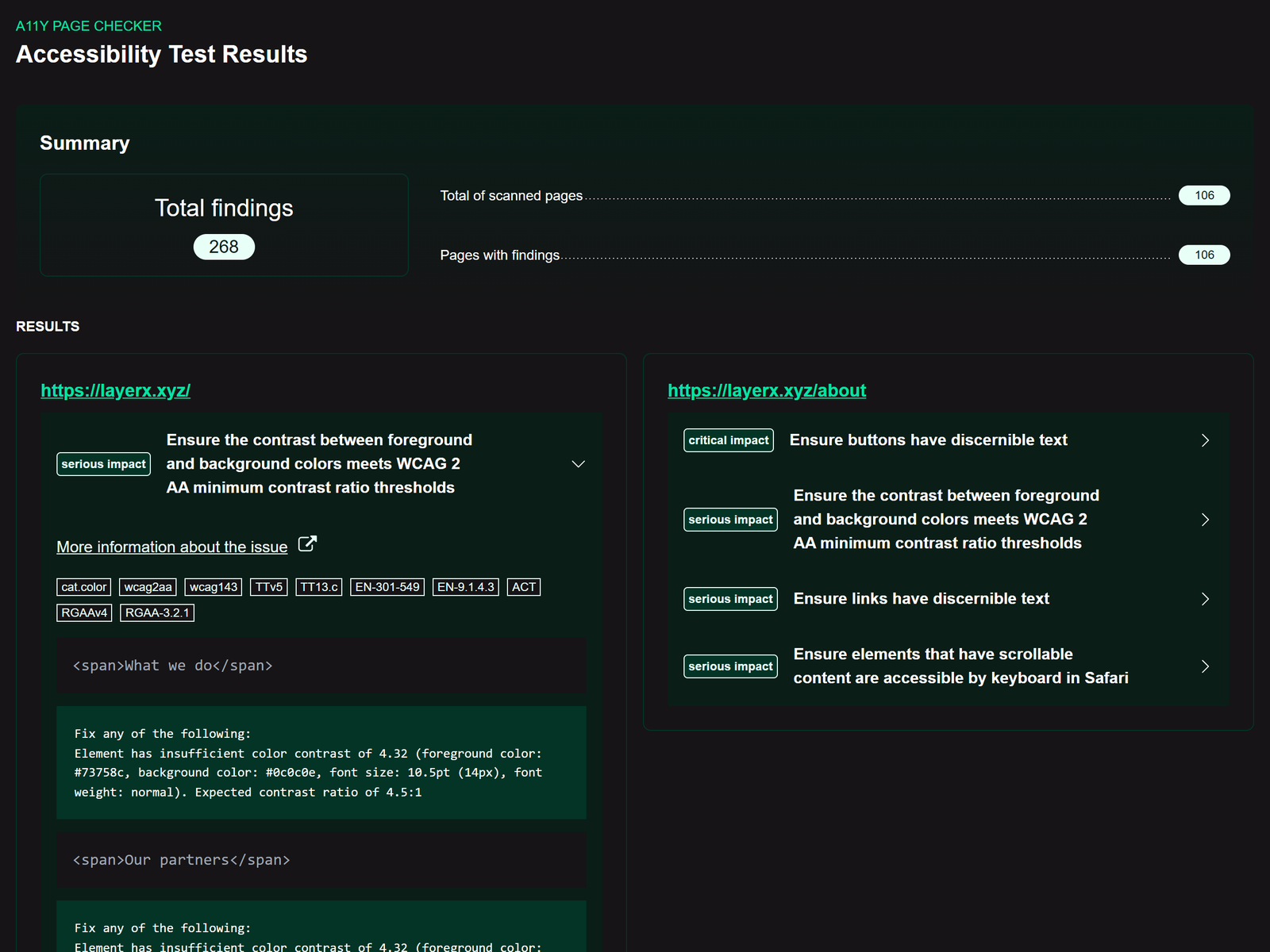
Manual testing remained essential, but browser extensions and one-off scripts did not scale well to a multi-page release. I started combining Playwright and axe-core so the same checks could run locally or in CI and produce JSON and HTML reports that were easier to compare and share.
Process and decisions
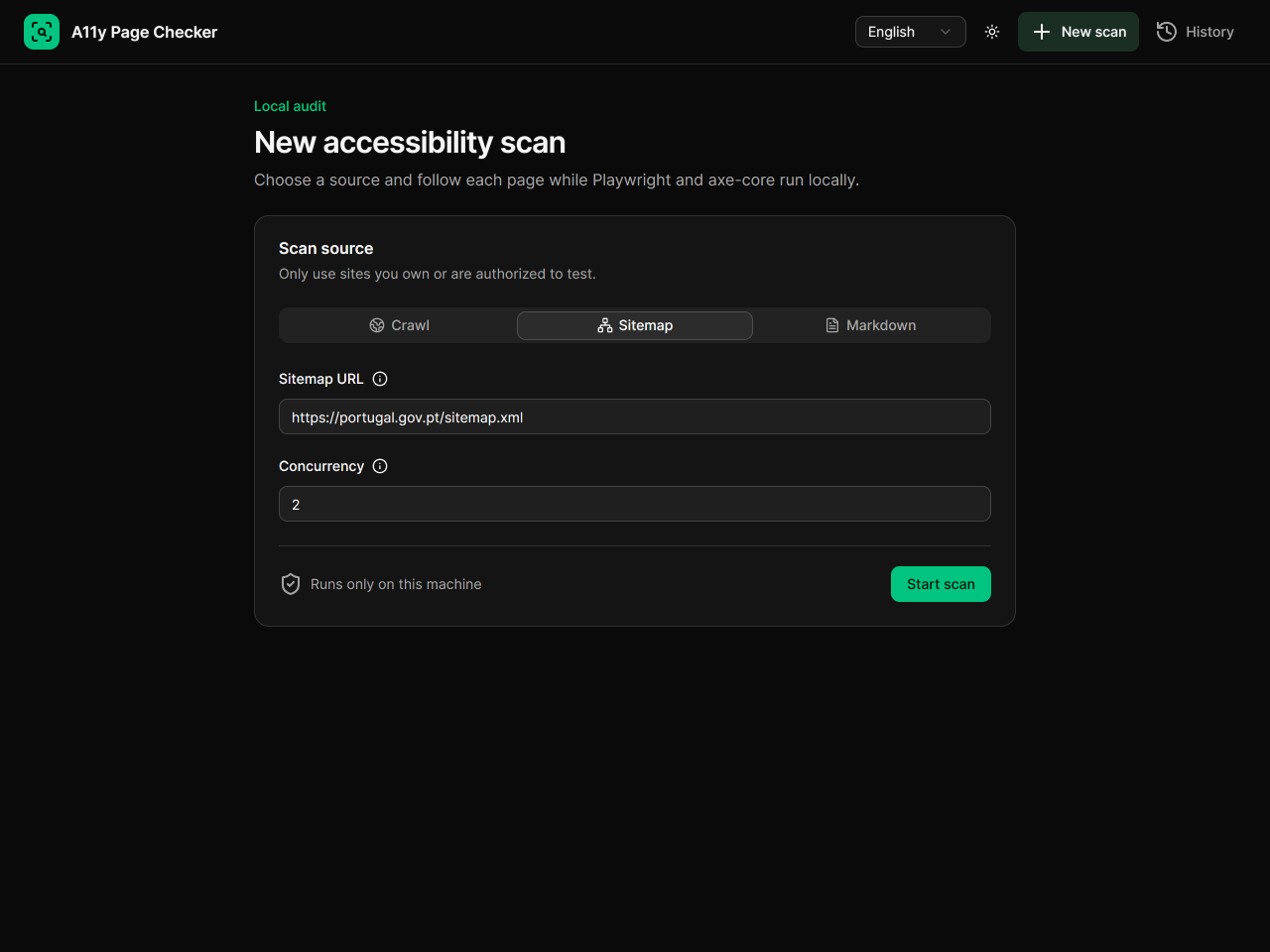
The first version read sitemap.xml and audited each URL. I later added explicit URL lists and same-origin crawling, making the scanner useful for sites and single-page applications whose routes are not always represented by a sitemap.
As the project grew, I split it into focused packages. URL discovery, Playwright and axe execution, and result normalization live in the core engine. A stable, typed ScanResult contract then supports replaceable adapters: the CLI, HTML reporter, local dashboard and MCP server.
The dashboard is deliberately local-first. It binds to loopback, queues scans and stores their history in SQLite. Typed lifecycle events allow each interface to show progress without coupling it to the scanner.
Markdown plans make an audit’s scope readable by people and tools. They already define targets and validate interaction metadata; executing those user-story actions is still being refined. I also introduced the MCP package early so AI agents could run the same audits through a defined tool interface instead of inventing a separate integration.
Accessibility and engineering
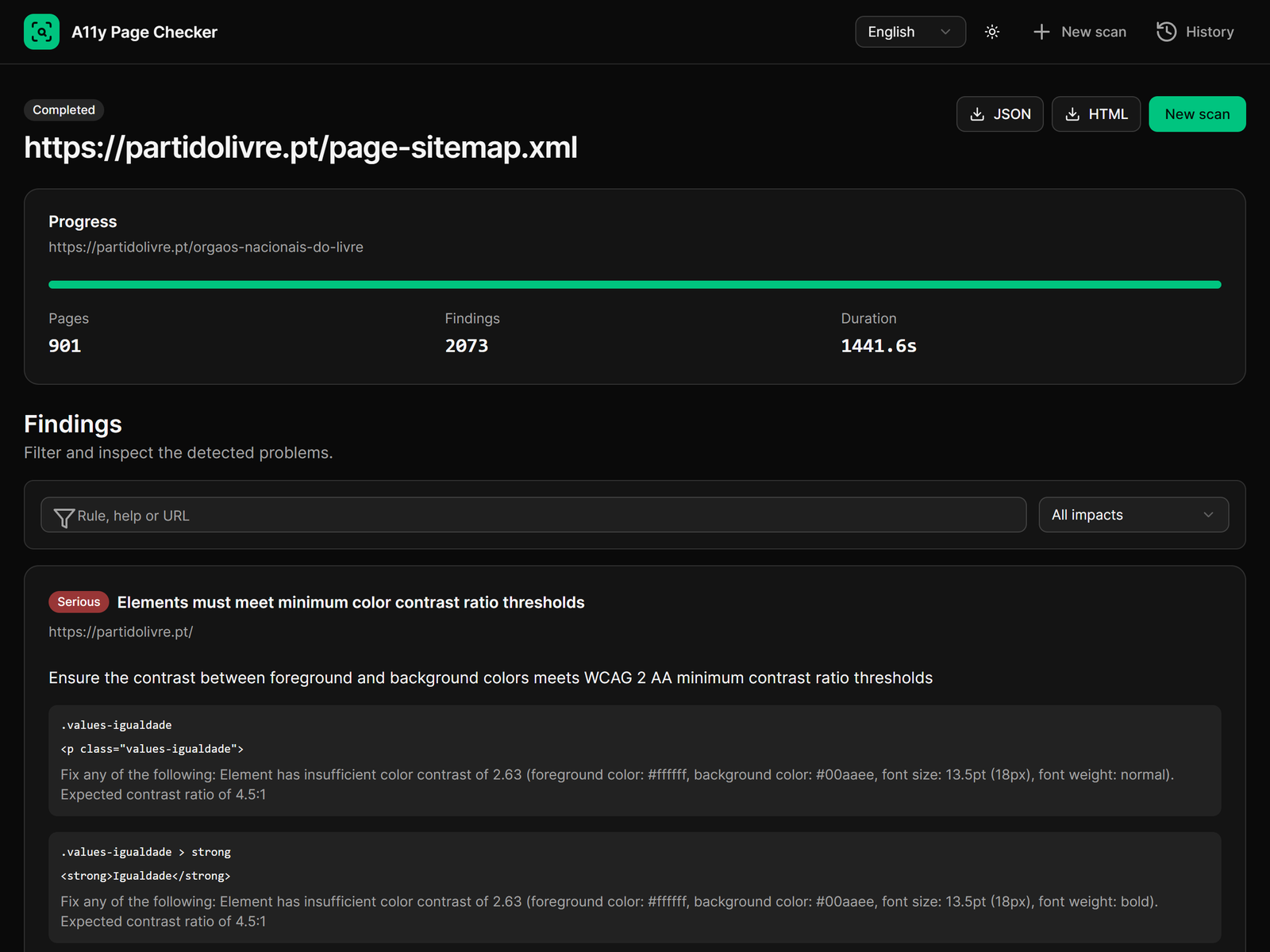
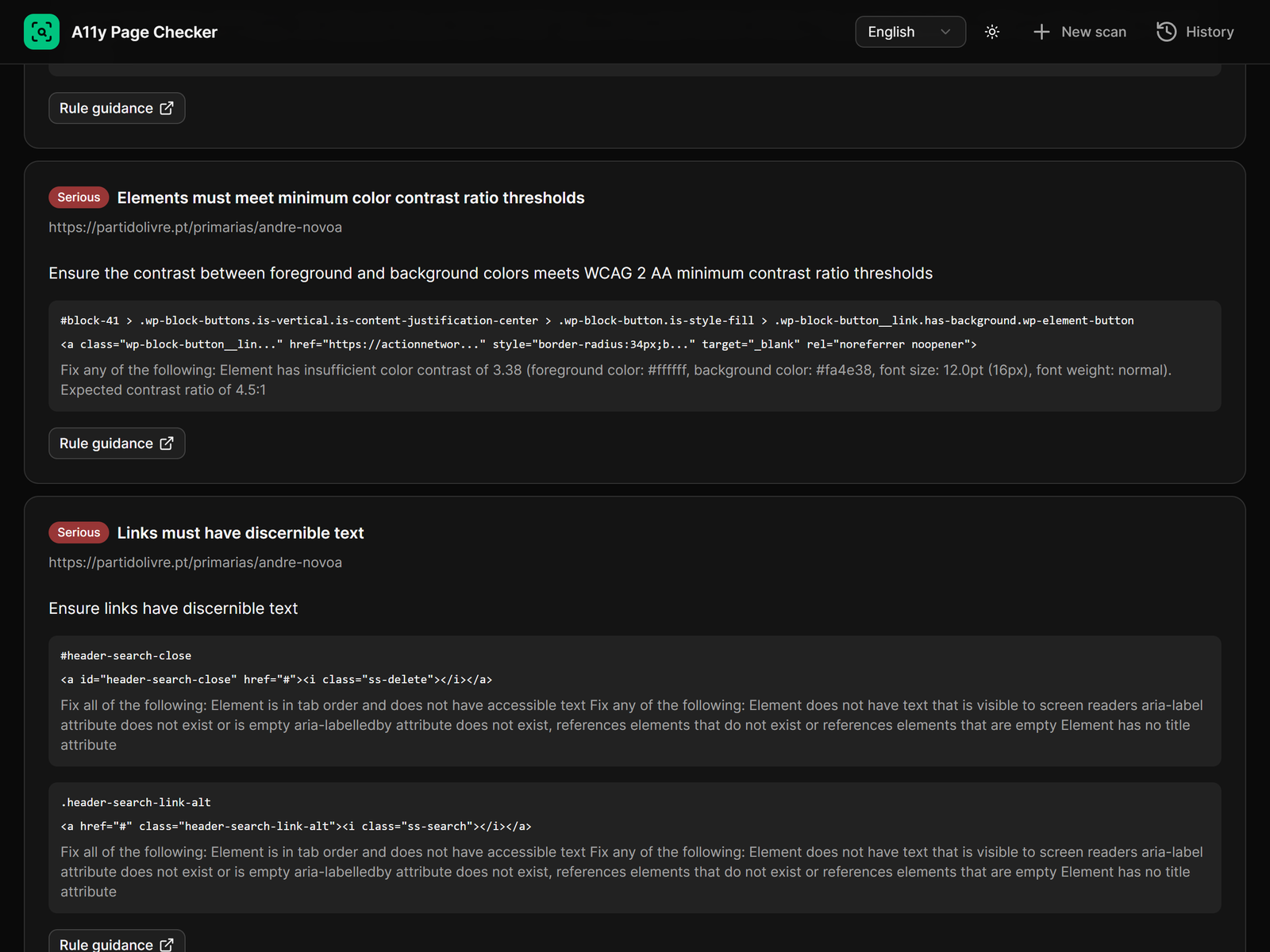
Automated checks cannot establish that a product is accessible, so the reports present axe-core findings rather than a blanket score or claim of conformance. Deterministic, escaped HTML, machine-readable JSON and explicit failure states make the results useful in local and automated workflows.
Each attempted URL keeps its own result. If one page fails to load or scan, the tool records that failure and continues with independent targets instead of discarding the rest of the audit.
Result
The original audits helped the Feedzai team reduce accessibility violations, leaving the published website with significantly fewer issues than its first build.
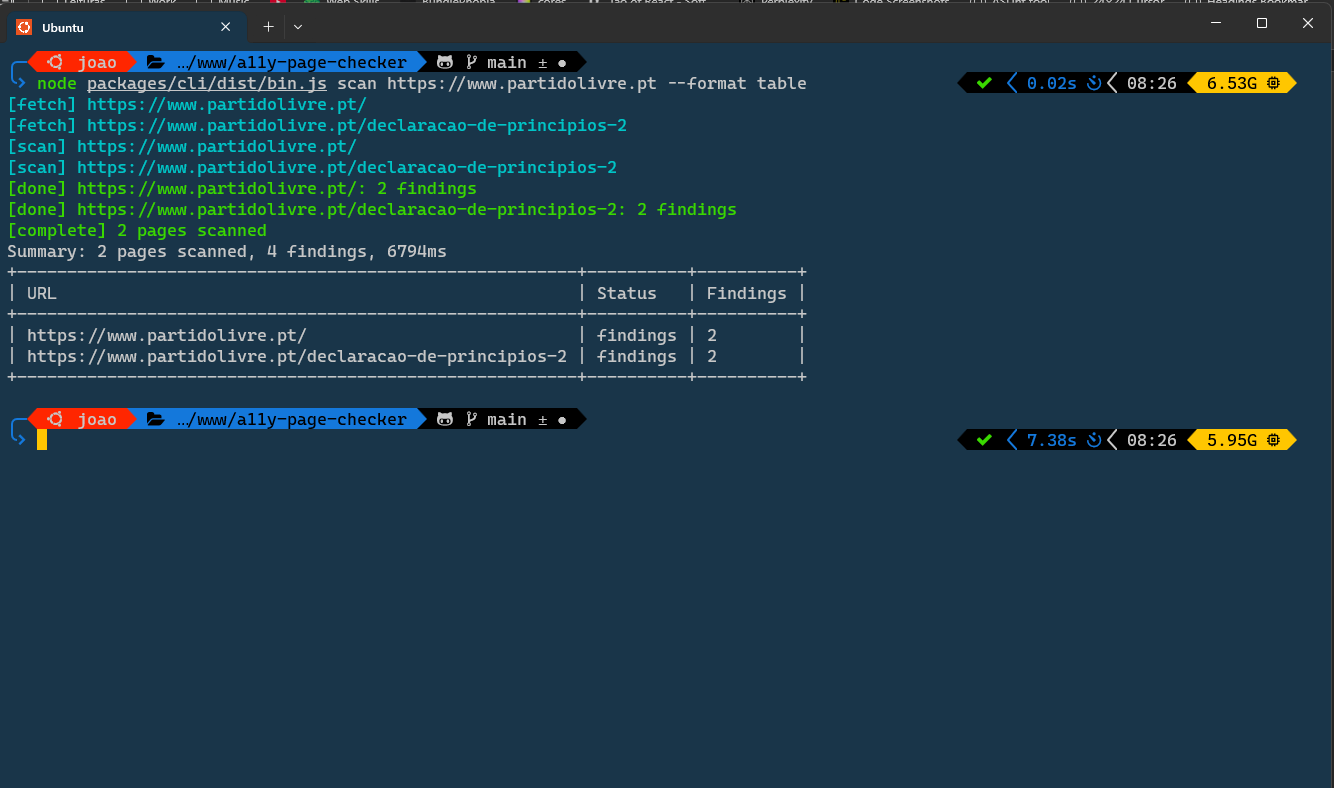
Today, A11y Page Checker supports single URLs, sitemaps and same-origin crawls through a TypeScript API, CLI, local dashboard, JSON and HTML reports, and MCP tools. It is intended for web developers, design system engineers and product teams that need repeatable audits in local workflows, CI pipelines or AI-assisted toolchains. The project remains under active development while I stabilize its public API and expand interaction-based scan plans.
Learning
A one-off check becomes much more valuable when a team can repeat it, compare the result and fit it into the way they already work.