
Paperboy
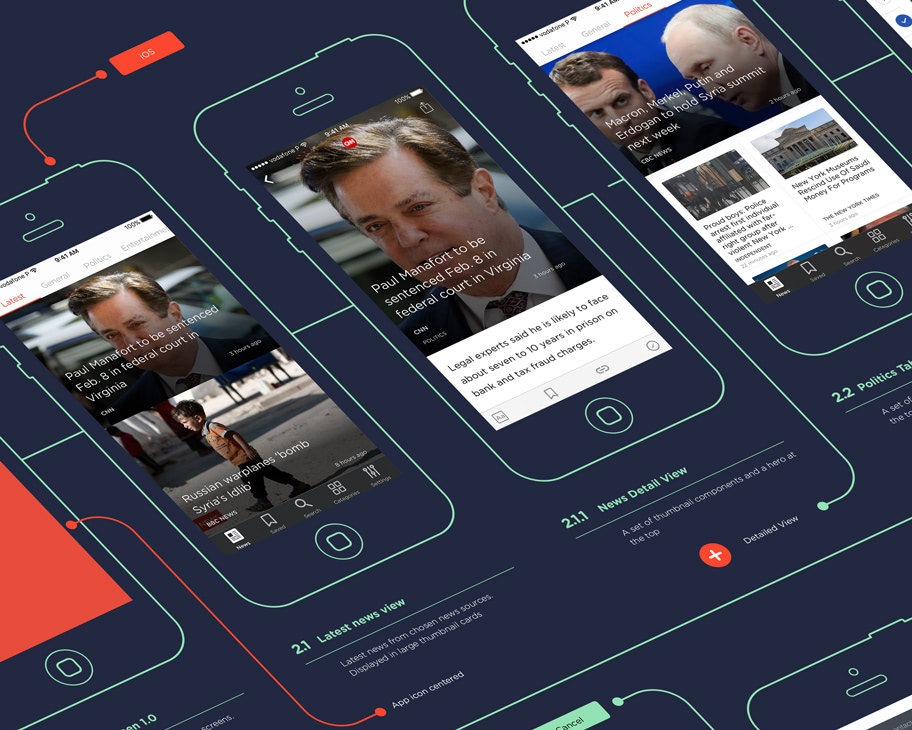
To be properly informed these days is a very tedious task. Plus, all the information is spread across different websites, news sources and blogs. The paper days are gone, so now we have all these devices where we should be getting information easily and without any biased curation.
Accessibility Considerations
As a Progressive Web App focused on making information accessible, accessibility was fundamental to Paperboy’s design:
- Semantic HTML structure - Proper use of article, section, and navigation elements
- Keyboard navigation - Full keyboard support for browsing articles and navigation
- Screen reader compatibility - Proper ARIA labels and live regions for dynamic content updates
- Responsive design - Works across all device sizes and screen orientations
- High contrast mode - Support for system-level high contrast preferences
- Offline accessibility - Service Worker caching ensures content is available even offline
- Focus management - Proper focus handling when navigating between articles and sources
- Reduced motion support - Respects user preferences for reduced motion
The app was built with web standards that are accessible by default, ensuring that users with disabilities can access news content regardless of their assistive technology needs.
Technical Approach
Built with:
- Gatsby - Static site generation with React
- News API - For fetching news articles from multiple sources
- Service Workers - For offline functionality and caching
- Styled Components - For component-scoped styling
- Cypress - For end-to-end testing
- Jest - For unit testing
The PWA approach allows the app to work across all platforms and browsers, with offline support through Service Workers. The app uses fluid typography and responsive design to work well on any screen size.
CSS features like scroll snapping were used to create a smooth, native-feeling scrolling experience while maintaining accessibility.
Process
The development process started with exploring native mobile development (Swift/Java) but quickly pivoted to web standards for better cross-platform support and accessibility.
Service Workers were implemented to cache news articles for offline reading, ensuring content is accessible even without an internet connection. The Vibration API was experimented with for mobile feedback, but implemented in a way that respects user preferences.
Testing was done with Cypress for end-to-end flows and Jest for unit tests. Accessibility testing was done with automated tools and manual keyboard navigation.
Results & Impact
Paperboy demonstrates that Progressive Web Apps can provide a native-like experience while maintaining the accessibility benefits of web standards. The project taught me a lot about PWA development, Service Workers, and building truly cross-platform applications.
The app successfully showcases how web technologies can be used to create accessible, offline-capable applications that work across all devices and platforms.